EcoGuide · Appliances · Updated 2026-10-01 · 800 words
Appliance Energy Efficiency Guide: What Is Worth Changing
The Short Answer
Heating, cooling and water heating are the big energy users in most homes: ENERGY STAR says nearly half of home energy goes to heating and cooling, and DOE puts water heating at about 18%. Appliances come after that, and the cheapest wins are in how you use them, not in replacing them:
| Appliance | Free change | If replacing, look for |
|---|---|---|
| Clothes washer | Wash in cold water | ENERGY STAR: about 20% less energy, 30% less water |
| Clothes dryer | Full loads, clean the lint filter | A heat pump dryer: about 70% less energy (ENERGY STAR) |
| Refrigerator | Retire the second fridge | ENERGY STAR: about 9% better than the federal minimum |
| Dishwasher | Run it full instead of hand washing | Any ENERGY STAR model |
The figures in this guide are ENERGY STAR’s and DOE’s; we link each one below. We do not test appliances in-house.
Clothes Washer: Cold Water Does Most of the Work
ENERGY STAR says water heating consumes about 90% of the energy it takes to operate a clothes washer, which is why switching from hot to warm cuts energy use roughly in half and cold cuts it further. If you are buying, ENERGY STAR certified washers use about 20% less energy and about 30% less water than regular washers.
Clothes Dryer: The Heat Pump Option
A conventional dryer heats air and vents it outside. A heat pump dryer recirculates and reheats the air in a closed loop; ENERGY STAR says heat pump dryers use around 70% less energy than conventional clothes dryers and need no outside vent, but they cost more up front and need a drain or a water tank you empty. Whatever you own: dry full loads, clean the lint filter every time, and keep the vent clear.
Refrigerator: Age and the Second Fridge
ENERGY STAR certified refrigerators are about 9% more energy efficient than models that meet the federal minimum, and older fridges were built to weaker standards. The easy win is the old second fridge in the garage or basement: empty it and unplug it, or measure it for a week with a plug-in meter before deciding. Keep coils clean and door seals tight on the one you keep.
Dishwasher: Usually Better Than the Sink
ENERGY STAR says a new certified dishwasher uses less than half as much energy as washing dishes by hand and saves about 8,400 gallons of water a year. Run it full, skip pre-rinsing under a hot tap, and use air-dry if it has one.
The Water Heater Behind Them
Washers and dishwashers draw on your water heater, so its setting matters too. DOE recommends setting the tank to 120°F for most uses. For more, see our water heating guide.
Measure Before You Replace
Guessing which appliance is the problem is how people replace the wrong one. A plug-in meter sits between the appliance and the outlet and counts the kilowatt-hours it uses. Leave it on the second fridge, a dehumidifier or a chest freezer for a week, then multiply the kWh by the rate on your bill. It works on standard 120 V plugs, so not on a 240 V dryer or range.
We may earn a commission if you buy through these links, at no extra cost to you. Products are chosen on published specifications; we do not test them in-house (how we choose).
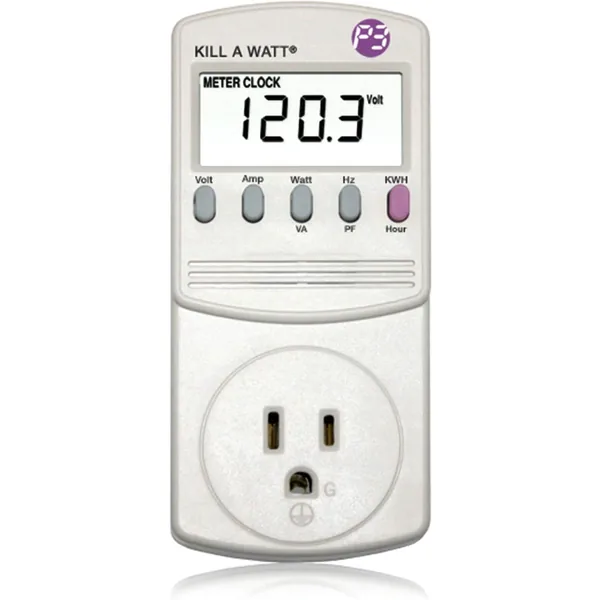
P3 Kill A Watt P4400 Electricity Usage Monitor
Plug-in meter that shows the kWh one appliance actually uses over days or weeks.
View on AmazonFree: Home Energy Audit Checklist (PDF)
A two-page, room-by-room checklist for finding air leaks, standby power and heating and cooling waste yourself, in the order that pays back fastest. Get it now, plus new fix guides by email. Unsubscribe any time.
By signing up you agree to receive emails from EcoHome Intelligence. See our Privacy Policy.
Frequently Asked Questions
Which appliance uses the most energy?
Heating and cooling equipment and the water heater use the most in most homes. Among plug-in appliances, dryers, refrigerators (especially old second fridges) and washers on hot cycles are the usual big users.
Does washing clothes in cold water save energy?
Yes. ENERGY STAR says water heating is about 90% of the energy a clothes washer uses, so switching to cold cuts most of it.
Is a heat pump dryer worth it?
It uses around 70% less energy than a conventional dryer, according to ENERGY STAR, and needs no outside vent. It costs more up front, so it makes most sense when you are replacing a dryer anyway or do a lot of laundry.
Is it cheaper to use a dishwasher or wash by hand?
ENERGY STAR says a new certified dishwasher uses less than half as much energy as hand washing and saves about 8,400 gallons of water a year.
Related Guides
- Water heating — the second-biggest energy use
- What is vampire power? — the always-on load
- Electric bill doubled? — failing appliances vs rate increases
