EcoGuide · Standby Power · Updated 2026-09-30 · 800 words
What Is Vampire Power? How to Find and Stop Phantom Loads
The Short Answer
Vampire power (also called phantom load, standby power or idle load) is the electricity devices draw when they are switched off or not being used: the TV waiting for the remote, the console ready for instant-on, the charger with nothing attached, the set-top box updating its guide.
It is small per device and large in total. The U.S. Department of Energy says these loads add up to almost 10% of residential electricity use. NRDC’s study of 70,000 northern California homes measured an average always-on load of 164 watts, about 1,300 kWh a year and nearly 23% of those homes’ electricity (NRDC, 2015).
Where It Comes From
NRDC’s in-home audits split the always-on load roughly like this:
- Consumer electronics, about half: TVs, set-top boxes and DVRs, game consoles, computers, printers, speakers, routers.
- Miscellaneous loads, about a third: things like recirculation pumps, aquariums, and devices on protected outlets.
- The rest: standby draw from heating and cooling equipment, lighting controls and kitchen and laundry appliances.
NRDC’s point is that there is rarely one big culprit: dozens of small loads add up. That is why measuring beats guessing.
How to Measure Yours
- Check your baseline. If your utility shows hourly smart meter data, the lowest hour in the middle of the night, when nothing is running on purpose, is roughly your always-on load.
- Measure devices one at a time with a plug-in meter such as the Kill A Watt, which shows watts and totals kWh, or an energy-monitoring smart plug that you can move around the house.
- Do the math. Standby watts × 8.76 = kWh per year; multiply by the price per kWh on your bill. For example, 25 W running all year is about 219 kWh.
Our standby cost calculator does the arithmetic with your own watts and rate.
How to Stop It
- Switch whole groups off on a schedule. A smart power strip turns the TV stack or desk off overnight.
- Change the device’s own power settings. Many consoles and TVs have an energy-saving mode that trades instant-on for lower standby draw.
- Unplug what you rarely use: the guest room TV, the second printer, the old stereo.
- Ask about the set-top box. Cable and satellite boxes with DVRs stay partly awake to record and update; ask your provider whether a lower-power model is available.
Leave on: the router if you need internet or smart home control overnight, a DVR that records, and anything medical, the fridge and freezer, or a sump pump.
Recommended Tools
We may earn a commission if you buy through these links, at no extra cost to you. Products are chosen on published specifications; we do not test them in-house (how we choose).
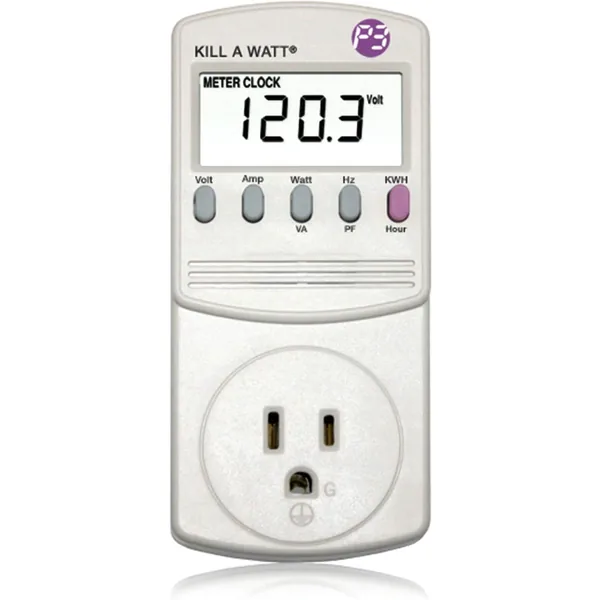
P3 Kill A Watt P4400
Plug-in meter: shows watts, amps, volts and cumulative kWh; P3 lists 0.2% accuracy.
View on Amazon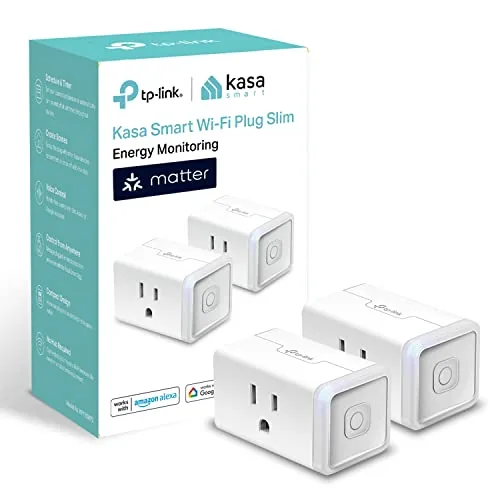
Kasa KP125M Energy-Monitoring Smart Plug (2-pack)
Measures one device and switches it on a schedule; Matter-certified.
View on Amazon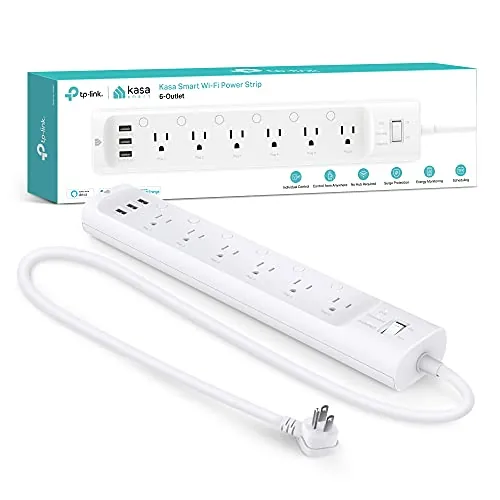
Kasa HS300 Smart Power Strip
Six individually switched outlets with energy monitoring for a whole TV stack or desk.
View on AmazonFree: Home Energy Audit Checklist (PDF)
A two-page, room-by-room checklist for finding air leaks, standby power and heating and cooling waste yourself, in the order that pays back fastest. Get it now, plus new fix guides by email. Unsubscribe any time.
By signing up you agree to receive emails from EcoHome Intelligence. See our Privacy Policy.
Frequently Asked Questions
What is vampire power?
Electricity that devices draw while switched off or idle, such as TVs in standby, consoles in instant-on mode and chargers with nothing attached. It is also called phantom load, standby power or idle load.
How much electricity does vampire power use?
The U.S. Department of Energy says it adds up to almost 10% of residential electricity use. NRDC measured an average always-on load of 164 watts, about 1,300 kWh a year, in the northern California homes it studied.
What devices use the most standby power?
In NRDC’s audits, consumer electronics made up about half of the always-on load: TVs, set-top boxes and DVRs, consoles, computers and printers. Measure your own devices, because it varies widely by model.
How do I calculate what vampire power costs me?
Multiply a device’s standby watts by 8.76 to get kWh per year, then multiply by the price per kWh on your electric bill.
Does unplugging things really help?
For devices you rarely use, yes: unplugging takes their standby draw to zero. For devices you use daily, a smart strip or schedule does the same job without the hassle.
Related Guides
- Find phantom loads in 4 minutes — a quick room-by-room check
- Best smart power strip — switch the TV stack off automatically
- Best smart plug with energy monitoring — measure and switch one device
