EcoGuide · Smart Thermostats · Updated 2026-09-28 · 800 words
Smart Thermostat Savings Calculator: How Long Until It Pays for Itself?
The Short Answer
ENERGY STAR says certified smart thermostats save, on average, about 8% of heating and cooling bills, or about $50 a year. Payback is simply the thermostat’s price divided by what it saves you each year.
| Thermostat price | Savings of $50/year | Savings of $100/year |
|---|---|---|
| $70 | about 17 months | about 8 months |
| $130 | about 2.6 years | about 16 months |
| $250 | about 5 years | 2.5 years |
Those are straight division, not forecasts. Your own savings depend on how big your heating and cooling bill is, and on what you were doing before — which is what the calculator below is for.
Smart Thermostat Payback Calculator
Enter your numbers above.
Defaults: 8% is ENERGY STAR’s average for certified smart thermostats; 45% reflects ENERGY STAR’s “nearly half” of home energy going to heating and cooling. Replace both with your own figures if you have them.
What Actually Decides Your Savings
A smart thermostat does not heat or cool more efficiently. It saves money by running the system less when nobody needs it. So the questions that decide your payback are about your habits, not the device:
- Were you already setting back? If you turn the heat down at night and when you leave, most of the saving is already yours. If you never touched the old thermostat, there is more to gain.
- How big is your heating and cooling bill? ENERGY STAR estimates nearly half of a home’s energy goes to heating and cooling. The same percentage saving is worth far more in a cold-climate home with electric heat than in a mild one.
- Is the house empty on a schedule? Long, predictable absences are where setbacks and away modes do the most.
- Do you have a heat pump with electric backup? Here the thermostat can cost you money as well as save it, depending on how it handles auxiliary heat. See which thermostats document an aux heat lockout.
Premium features — room sensors, occupancy detection — mostly improve comfort. They can help the saving if they stop the system conditioning rooms nobody is in, but no manufacturer publishes a verified figure for how much.
When a Smart Thermostat Pays Back Fastest
- You currently leave the temperature fixed around the clock.
- Your heating and cooling bill is large: electric heat, a cold or hot climate, or a big house.
- Your utility offers a rebate. Many do, and it comes straight off the price in the calculator. Check your utility’s website; programmes change year to year.
- You buy a budget model. A thermostat under $100 does the scheduling and away-mode work that produces most of the saving.
And when it may never pay back: you already use a programmable thermostat well, your climate is mild, or you are replacing a working smart thermostat just to upgrade.
Thermostats at Different Price Points
Price is the biggest lever on payback. Check the current price on the listing and put it into the calculator.
We may earn a commission if you buy through these links, at no extra cost to you. Products are chosen on published specifications; we do not test them in-house (how we choose).
Sensi Lite Smart Thermostat (ST25)
Budget Wi-Fi thermostat with app scheduling; ENERGY STAR certified.
View on AmazonHoneywell Home T5 Smart Thermostat
Touchscreen Wi-Fi thermostat with 7-day scheduling and geofencing.
View on Amazon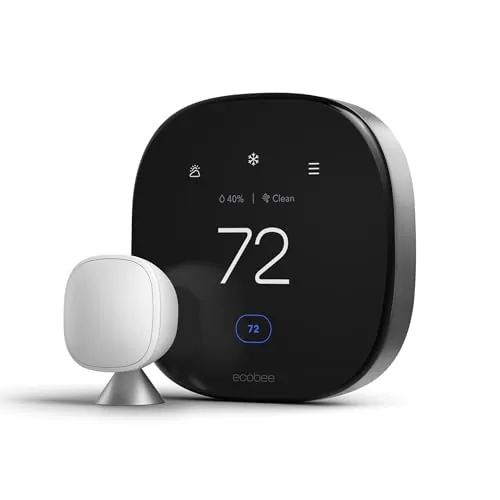
ecobee Smart Thermostat Premium
Premium pick with a SmartSensor included; best documented heat pump controls.
View on AmazonFree: Home Energy Audit Checklist (PDF)
A two-page, room-by-room checklist for finding air leaks, standby power and heating and cooling waste yourself, in the order that pays back fastest. Get it now, plus new fix guides by email. Unsubscribe any time.
By signing up you agree to receive emails from EcoHome Intelligence. See our Privacy Policy.
Frequently Asked Questions
How much does a smart thermostat save per year?
ENERGY STAR puts the average for certified smart thermostats at about 8% of heating and cooling bills, or about $50 a year. Homes with larger heating and cooling bills, or with no setback routine before, can save more; homes that already set back consistently may save little.
How long does a smart thermostat take to pay for itself?
Divide the price (after any rebate) by the annual saving. At ENERGY STAR’s $50 average, a $70 thermostat pays back in about 17 months and a $250 one in about 5 years.
Is a more expensive smart thermostat worth it for savings?
Usually not on savings alone. Scheduling and away modes produce most of the saving, and budget models have both. Pay more for features you will use, such as room sensors or better heat pump controls.
Does a smart thermostat save money with a heat pump?
It can, if it is set up to limit auxiliary heat. Configured badly, a thermostat can bring on expensive backup heat more often, which cancels out the saving.
Related Guides
- How much do smart thermostats save? — what the ENERGY STAR data says
- Best cheap smart thermostats under $100 — the fastest-payback options
- Best thermostat for a heat pump — aux heat lockout explained
