EcoGuide · Electric Bills · Updated 2026-09-30 · 900 words
Solar Panels but Electric Bill Still High? 5 Things to Check
The Short Answer
Solar lowers the energy you buy from the grid; it rarely takes the bill to zero. When the bill is higher than you expected, the cause is almost always one of five things, and each can be checked from your bill and your solar monitoring app:
- Fixed charges that solar does not offset.
- Lower credit for exported power than you were told.
- The system producing less than its estimate.
- You use more electricity than before: an EV, a heat pump, a pool.
- When you use power, on a time-of-use rate.
1. Fixed Charges
Most utilities charge a monthly customer or connection charge, and some add minimum bills or other fixed fees, that apply however much energy you produce. Look for the lines on your bill that do not change with kWh: that part of the bill solar cannot remove.
2. How Your Exports Are Credited
The value of the power you send to the grid depends on your utility’s tariff. In California, for example, customers applying for interconnection since April 15, 2023 take service on the Net Billing Tariff, where exports are credited at Avoided Cost Calculator values that are “usually lower than import rates” according to the CPUC. Under older net metering, a kWh exported was worth roughly a kWh imported; under net billing it is worth less.
If your savings estimate assumed full retail credit for exports, the bill will come in higher than promised. The fix is to use more of your own solar power at home (see point 5) rather than exporting it.
3. The System Is Producing Less Than Expected
Open your inverter or monitoring app and compare this year’s monthly production with the estimate in your installation contract, or with an estimate from NREL’s free PVWatts calculator, which estimates the output of a grid-connected solar system from its location and specs.
- A sudden drop on a sunny stretch points to a fault: an inverter offline, a tripped breaker, a failed optimizer or microinverter. Call the installer; many faults are under warranty.
- A gradual shortfall points to shading (a tree that grew), soiling, or a system smaller than you think.
- No data at all means monitoring has dropped off Wi-Fi, which also hides faults. Reconnect it first.
4. You Are Using More Electricity
Compare the kWh you import from the grid with the same months before solar. New loads add up fast: an EV, a heat pump replacing gas heat, a pool pump or hot tub, a home office. The arithmetic for any device is watts × hours ÷ 1,000 = kWh; a whole-home energy monitor shows which circuits grew.
5. When You Use Power
On a time-of-use rate, the evening peak is usually the most expensive time, and it comes after solar production has faded. Shift what you can into the sunny middle of the day:
- Run the dishwasher and laundry around midday with delay-start.
- Charge the EV during the day when you can, or set the schedule for the cheapest hours.
- Pre-cool the house in the afternoon on hot days.
- Consider a battery if you still have a large evening peak; see batteries vs load shifting.
Monitoring Your Consumption
We may earn a commission if you buy through these links, at no extra cost to you. Products are chosen on published specifications; we do not test them in-house (how we choose).
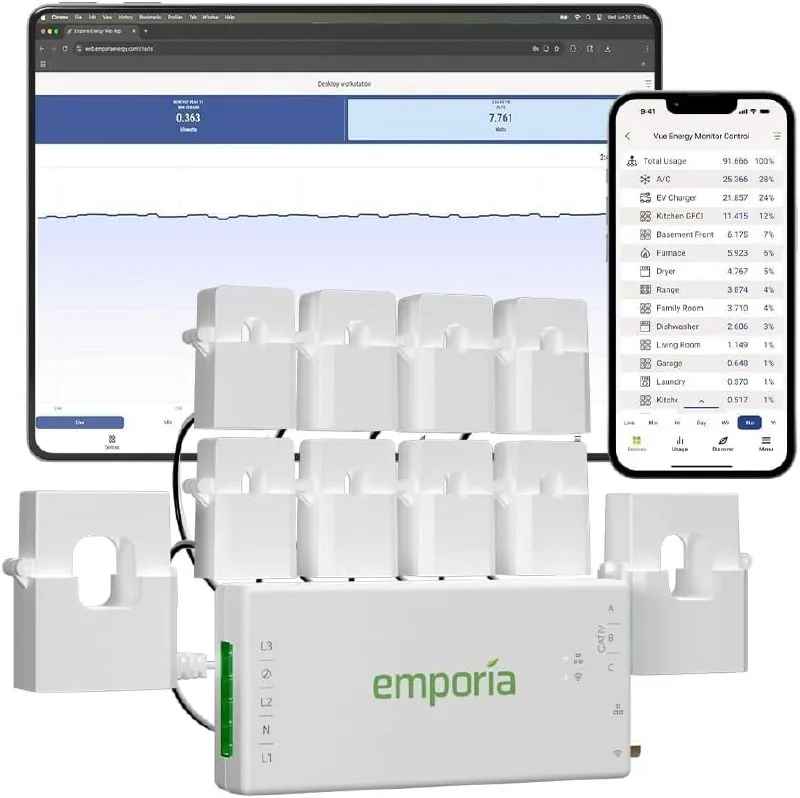
Emporia Vue 3 Home Energy Monitor
Clamps on the mains and up to 16 circuits in the panel, so you see which loads grew; no subscription.
View on AmazonFree: Home Energy Audit Checklist (PDF)
A two-page, room-by-room checklist for finding air leaks, standby power and heating and cooling waste yourself, in the order that pays back fastest. Get it now, plus new fix guides by email. Unsubscribe any time.
By signing up you agree to receive emails from EcoHome Intelligence. See our Privacy Policy.
Frequently Asked Questions
Why is my electric bill still high after installing solar panels?
Usually fixed charges that solar cannot offset, lower credit for exported power under net billing, a system producing less than expected, higher electricity use (an EV, heat pump or pool), or using most power in the evening on a time-of-use rate.
How do I know if my solar panels are underperforming?
Compare monthly production in your monitoring app with the estimate in your contract or with NREL’s PVWatts calculator. A sudden drop on sunny days points to a fault; call your installer.
Do I still pay an electric bill with solar?
Usually yes: most utilities keep a monthly customer charge, and you still buy power when the panels are not producing enough, such as at night.
What changed with net billing in California?
Since April 15, 2023, new California solar customers take service on the Net Billing Tariff, where exports are credited at Avoided Cost Calculator values that the CPUC says are usually lower than import rates.
Related Guides
- Home energy storage — batteries vs load shifting
- Best home energy monitors — see which circuits use the power
- Electric bill doubled in two years? — rates vs usage
