EcoGuide · Air Sealing · Updated 2026-09-30 · 1,500 words
Best Thermal Leak Detector for Finding Home Drafts
The Short Answer
A thermal leak detector points you to the spots where a wall, window frame or outlet is colder (in winter) than the surfaces around it. That is where outside air is getting in or insulation is missing. There are three kinds of tool, and they differ in what they show you rather than in accuracy:
| Tool | Type | What it shows you | Key specs (manufacturer) |
|---|---|---|---|
| Etekcity Lasergrip 1080 | Infrared thermometer | One surface temperature at a time, as a number | 12:1 distance-to-spot; emissivity adjustable 0.1–1.0; ±2% or ±2°C; 2×AAA |
| BLACK+DECKER TLD100 | Leak detector | A colored light: blue if a spot is colder than your reference, red if warmer, green if within range; plus the temperature on an LCD | Variance switch: 1°F, 5°F or 10°F; one 9V battery |
| Klein Tools TI250 | Thermal camera | A live heat picture of a whole wall, which you can save | 19,200-pixel sensor; 2.4″ screen; −4 to 752°F; <60 mK sensitivity; 32 GB storage; rechargeable |
Our pick for most homes: the TLD100, because the color light answers the only question that matters on a draft hunt (“is this spot colder than the wall around it?”) without any mental arithmetic. Tightest budget: the Lasergrip, which has the more flexible specs (adjustable emissivity, a published 12:1 spot ratio) but leaves the comparing to you. If you want pictures for a contractor or you suspect whole wall sections have no insulation: a thermal camera such as the TI250, which costs several times more.
We chose these by comparing each manufacturer’s published specifications; we do not test products in-house (how we choose). Sources are listed at the end.
Spot Tools vs a Thermal Camera
The thermometer and the TLD100 each read one spot: a circle whose size grows with distance. At a 12:1 distance-to-spot ratio, standing 12 inches away reads a 1-inch circle; standing 6 feet away reads a 6-inch circle, which can average a cold gap with the warm wall around it. For leak hunting, get close (1–3 feet) and sweep slowly along edges.
A thermal camera reads thousands of spots at once, so a cold stripe along a ceiling joint or a whole un-insulated stud bay shows up as a picture. That is the same idea as a professional thermographic scan, which the U.S. Department of Energy describes as using “an infrared scanner to detect differences in temperature” along walls, roofs, windows and doors (DOE).
1. BLACK+DECKER TLD100: Easiest for Draft Hunting
According to the user manual, you first point the TLD100 at a well-insulated surface at room temperature and set that as your reference. As you sweep, the light turns blue when a spot is colder than the reference by more than the variance you chose (1°F, 5°F or 10°F), red when it is warmer, and green when it is within range. The LCD shows the scanned and reference temperatures side by side.
- Why it is our top pick: the reference-and-color method does the comparison for you, which is the step people get wrong with a plain thermometer.
- Use the 1°F setting on mild days, when the indoor–outdoor difference is small, and 5°F on cold days so every slightly cool corner does not flash blue.
- What the maker does not publish: the manual we reviewed lists no distance-to-spot ratio or emissivity setting, so stay close to the surface and be wary of shiny materials such as foil or bare metal, which infrared tools misread.
We may earn a commission if you buy through these links, at no extra cost to you. Products are chosen on published specifications; we do not test them in-house (how we choose).
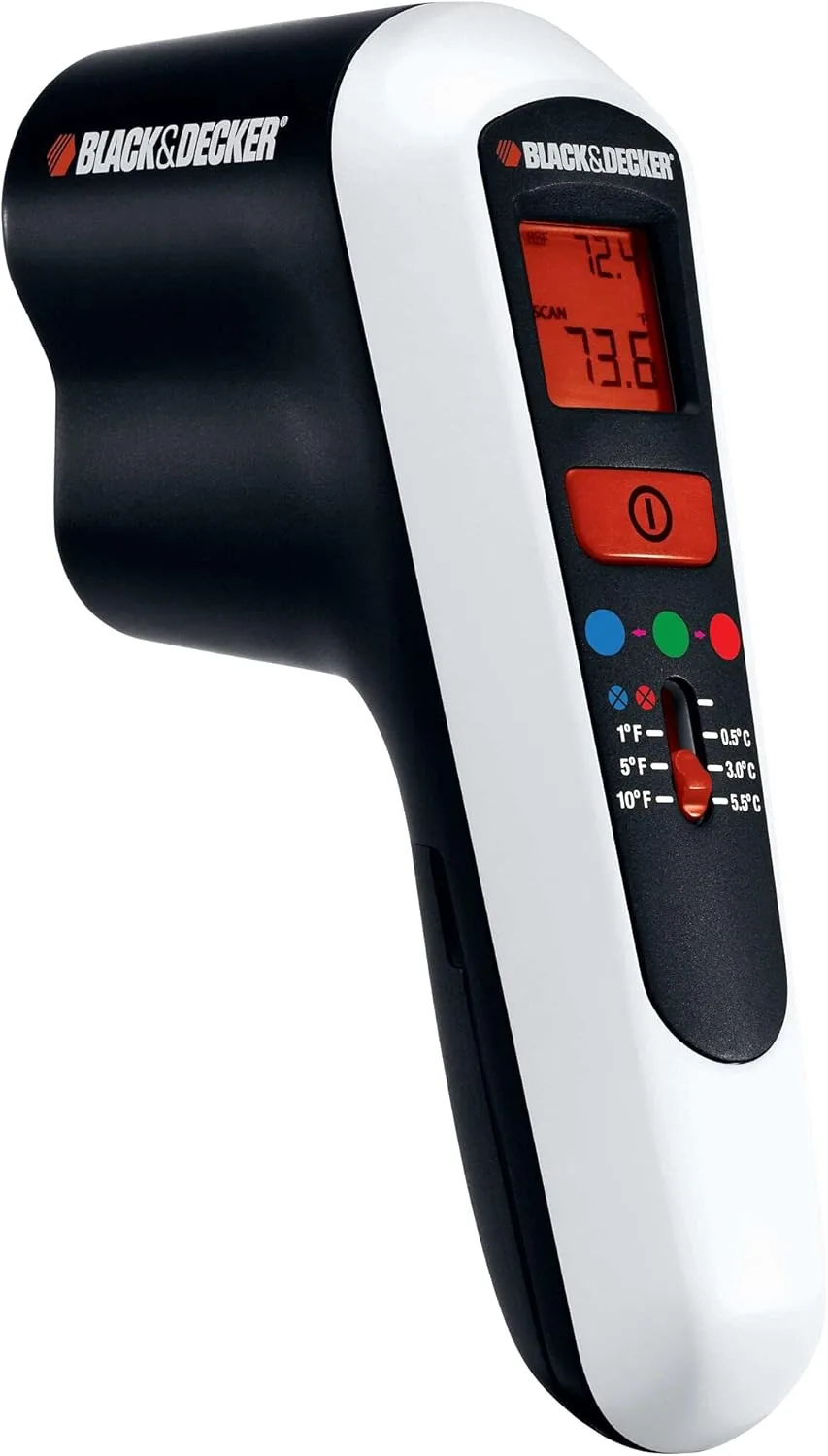
BLACK+DECKER TLD100 Thermal Leak Detector
Reference temperature plus blue/red/green light; 1°F, 5°F or 10°F variance; 9V battery.
View on Amazon2. Etekcity Lasergrip 1080: Best on a Tight Budget
A general-purpose infrared thermometer with a laser pointer. Etekcity lists a −58 to 1,130°F range, ±2% or ±2°C accuracy, a 12:1 distance-to-spot ratio and adjustable emissivity (0.1–1.0). That last spec matters on a draft hunt: set it to about 0.95 for painted drywall and wood trim.
The trade-off is method, not quality. It gives you a number, so you need a baseline: read the middle of an interior wall first, then compare each window corner, outlet and baseboard against it. A spot several degrees colder than your baseline on a cold day is worth a closer look.
We may earn a commission if you buy through these links, at no extra cost to you. Products are chosen on published specifications; we do not test them in-house (how we choose).
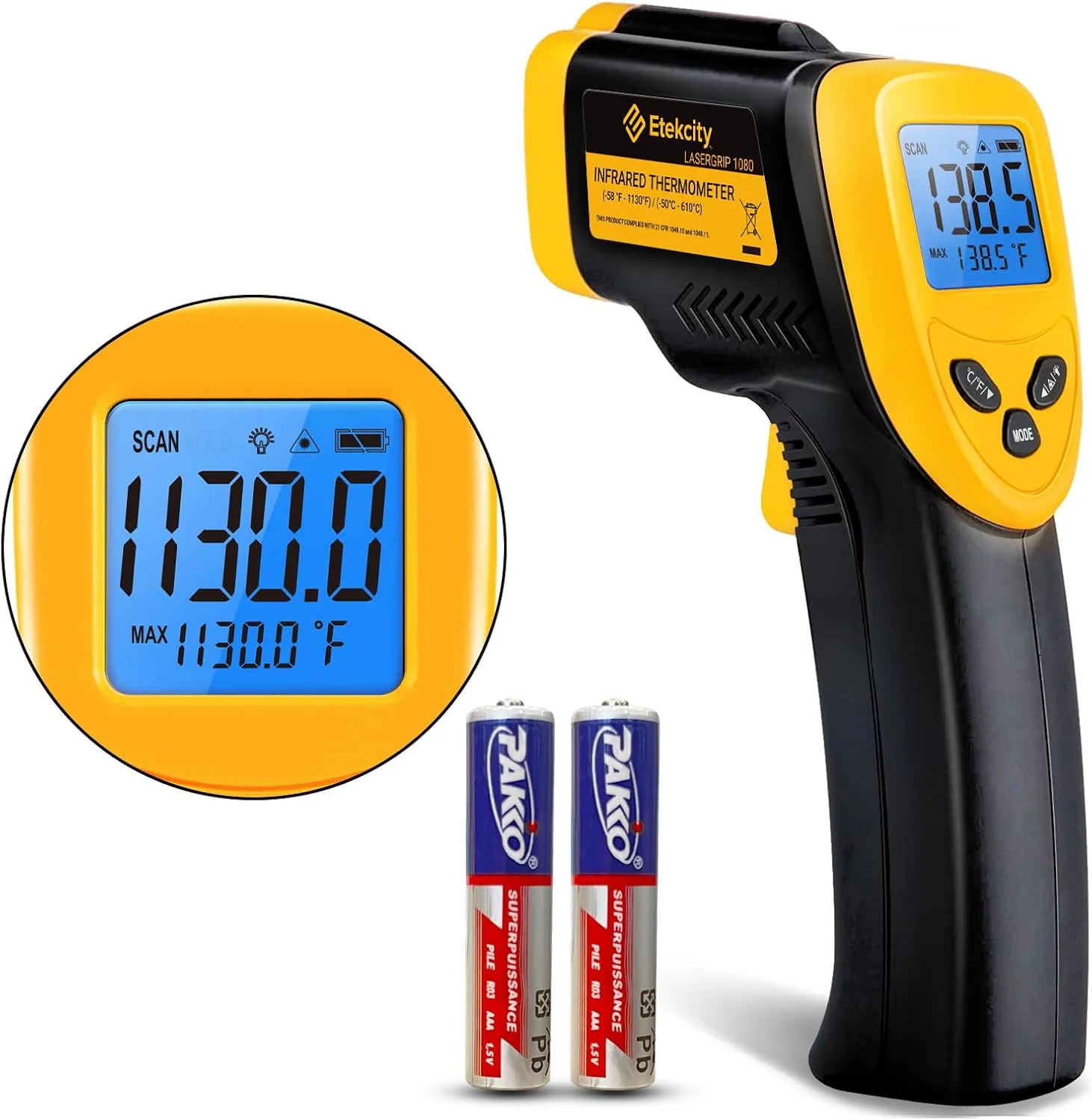
Etekcity Lasergrip 1080 Infrared Thermometer
12:1 spot ratio, adjustable emissivity 0.1–1.0, backlit display; runs on 2×AAA.
View on Amazon3. Klein Tools TI250: When You Want the Whole Picture
A thermal camera rather than a spot tool. Klein lists a 19,200-pixel sensor, a 2.4-inch screen, a −4 to 752°F range, thermal sensitivity under 60 mK, 32 GB of image storage with USB-C transfer, and a rechargeable battery.
Choose it if you want images to show a contractor or landlord, or you suspect entire wall or ceiling sections are missing insulation, which a spot tool finds only by sweeping every inch. Skip it if you just want to find the drafty window and the outlet that whistles: it costs several times as much as the other two, and they find those as well.
We may earn a commission if you buy through these links, at no extra cost to you. Products are chosen on published specifications; we do not test them in-house (how we choose).
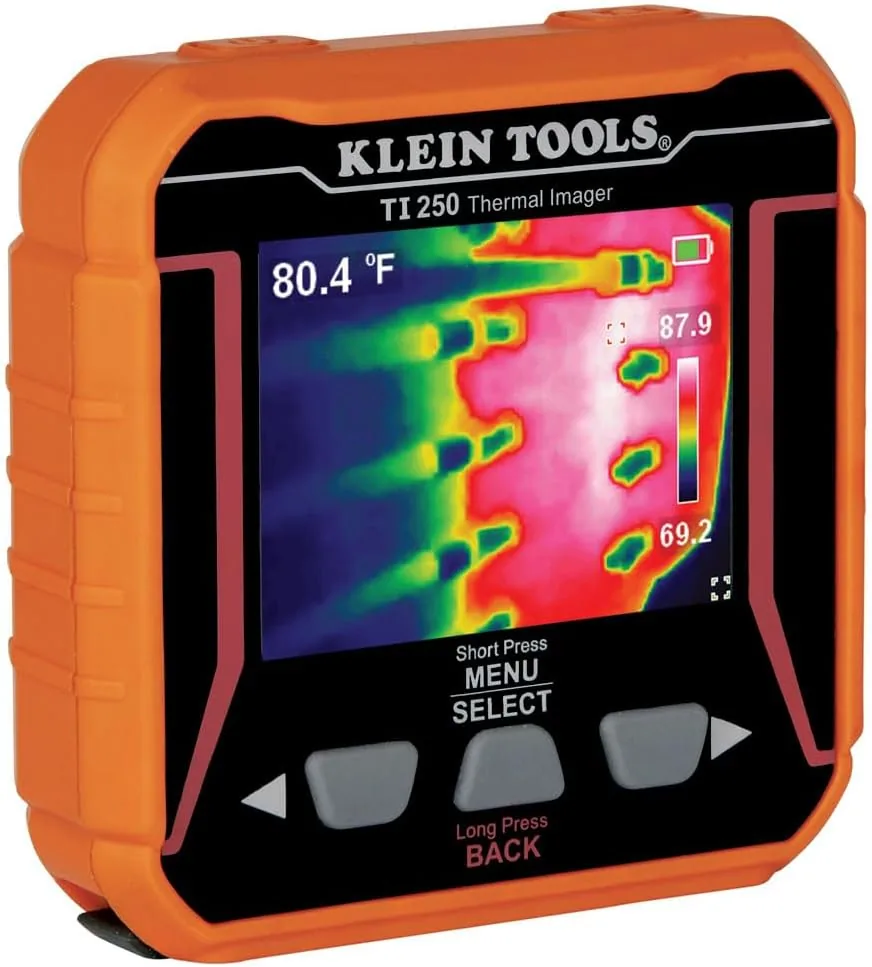
Klein Tools TI250 Rechargeable Thermal Imager
Thermal camera: 19,200-pixel sensor, 2.4″ screen, saves images to 32 GB storage.
View on AmazonHow to Run a Draft Sweep
- Pick a cold (and ideally windy) day. DOE recommends a “cool, windy day” for DIY leak checks, because the bigger the indoor–outdoor difference, the clearer a leak reads.
- Depressurize the house. Close all windows and exterior doors, turn off combustion appliances such as a gas water heater or furnace, and switch on the bathroom and kitchen exhaust fans. That pulls outside air in through every gap.
- Set your baseline on a well-insulated interior wall (the TLD100’s reference, or a written number for a thermometer).
- Sweep the usual suspects, which are the places DOE lists: window and door frames, baseboards, electrical outlets and switch plates, attic hatches, and anywhere two materials meet.
- Confirm with smoke. Pass a lit incense stick along any cold spot. If the smoke is drawn in or blown away, it is an air leak; if it rises straight, the cold spot is more likely missing insulation.
Mark each leak with painter’s tape as you go. Our full walkthrough is in how to find thermal leaks, and the free audit checklist has a room-by-room list.
Is It Worth It?
The detector saves nothing by itself; sealing what it finds does. ENERGY STAR estimates that homeowners can save an average of 15% on heating and cooling costs (about 11% of total energy costs) by air sealing and adding insulation. A detector makes that job faster by showing where to put the caulk and weatherstripping first.
Free: Home Energy Audit Checklist (PDF)
A two-page, room-by-room checklist for finding air leaks, standby power and heating and cooling waste yourself, in the order that pays back fastest. Get it now, plus new fix guides by email. Unsubscribe any time.
By signing up you agree to receive emails from EcoHome Intelligence. See our Privacy Policy.
Frequently Asked Questions
What is the best thermal leak detector for home use?
For most homes, the BLACK+DECKER TLD100: you set a reference temperature and its light turns blue on spots colder than that, so there is nothing to interpret. On a tighter budget, an infrared thermometer such as the Etekcity Lasergrip 1080 does the same job if you compare readings against a baseline yourself.
Can I use a regular infrared thermometer to find drafts?
Yes. Read the middle of an interior wall first as a baseline, then compare window corners, outlets and baseboards against it on a cold day. Set the emissivity to about 0.95 for painted surfaces if your thermometer allows it.
Is a thermal camera better than a leak detector?
It shows more, because it images a whole wall at once instead of one spot, and it can save pictures. For finding ordinary drafts around windows, doors and outlets, a spot tool works if you sweep slowly and stay close.
When is the best time to look for air leaks?
On a cold, windy day, with windows closed, combustion appliances off and exhaust fans running. The bigger the temperature difference between inside and outside, the more clearly leaks show up.
How much can sealing air leaks save?
ENERGY STAR estimates an average of 15% on heating and cooling costs, or about 11% of total energy costs, from air sealing plus adding insulation.
Related Guides
- How to find thermal leaks — the full step-by-step sweep
- How to seal an attic hatch — usually one of the biggest single leaks
- Drafty basement — sealing the rim joist and sill
