EcoGuide · Heat Pumps · Updated 2026-10-02 · 1,000 words
Heat Pump Blowing Cold Air? Why That Is Usually Normal
The Short Version
Put your hand over a heat pump vent and the air feels lukewarm. That is expected. Carrier puts numbers on it: heat pump supply air can typically be around 85–100°F during heating, compared with roughly 120–140°F from a gas furnace. Trane gives a similar range and adds the reason it disappoints: the air is warm, but the air feels cool to us, because it is below skin temperature.
A heat pump makes up the difference by running longer. Carrier says heat pumps typically run for longer cycles than furnaces, and that this is normal. So lukewarm air and long run times, on their own, are not a fault.
The Other Normal Cause: A Defrost Cycle
In cold, damp weather frost forms on the outdoor coil. To clear it, Lennox explains, the heat pump temporarily switches from heating to cooling mode, sending heat to the outdoor coil. Indoors the air can turn properly cool for a few minutes, although many systems switch on their backup heat strips during defrost to soften this.
- How long: Lennox says a typical cycle runs 5 to 15 minutes; Carrier says about 5 to 10.
- How often: most systems check for frost every 30 to 90 minutes in heating mode, according to Lennox. Trane says defrost is more common when it is in the 20s or 30s outside.
- Steam from the outdoor unit: Lennox says it is water vapor and normal.
- A whooshing sound: the system changing modes. Also normal.
More on telling a normal defrost from a real icing problem: heat pump frozen or iced up.
When It Is Actually a Problem
| Normal | Worth investigating |
|---|---|
| Air is lukewarm but the house reaches its setpoint | The house stays more than 2–3°F below the thermostat setting |
| Cool air for a few minutes, then warm again | Cool air that never turns warm |
| Light frost that clears after a defrost | Ice thicker than a quarter inch, or ice still there after a defrost |
| Outdoor unit running while heat is called for | Outdoor unit silent and still |
| Long, steady run times | Starting and stopping every few minutes |
The ice and temperature thresholds are Carrier’s: it says ice thicker than 1/4 inch or ice that remains after defrost is not normal, and that an indoor temperature consistently more than 2–3°F from the setting is a reason to have the system checked.
Do not switch to emergency heat because the air feels cool. Emergency heat shuts the heat pump off and runs the backup heat only, which costs more. See emergency heat vs auxiliary heat.
Three Checks Before You Call Anyone
- The outdoor unit. It should be running when the thermostat calls for heat. Clear leaves, debris and snow from around and on top of it. Carrier and Lennox both ask for about two feet (24 inches) of clear space around the unit.
- The filter. Lennox: a clogged filter restricts airflow, making it harder for the heat pump to work. The Department of Energy says to clean or change filters every 3 months or as the maker recommends.
- The thermostat mode. Make sure it is set to Heat, not Cool, and not left on emergency heat after a cold spell. If it heats when it should cool or the reverse, see heat pump heating instead of cooling.
Measure It Instead of Guessing
Air that feels cool on your hand can still be heating the house. An infrared thermometer pointed at a supply vent tells you whether you are in Carrier’s 85–100°F range.
We may earn a commission if you buy through these links, at no extra cost to you. Products are chosen on published specifications; we do not test them in-house (how we choose).
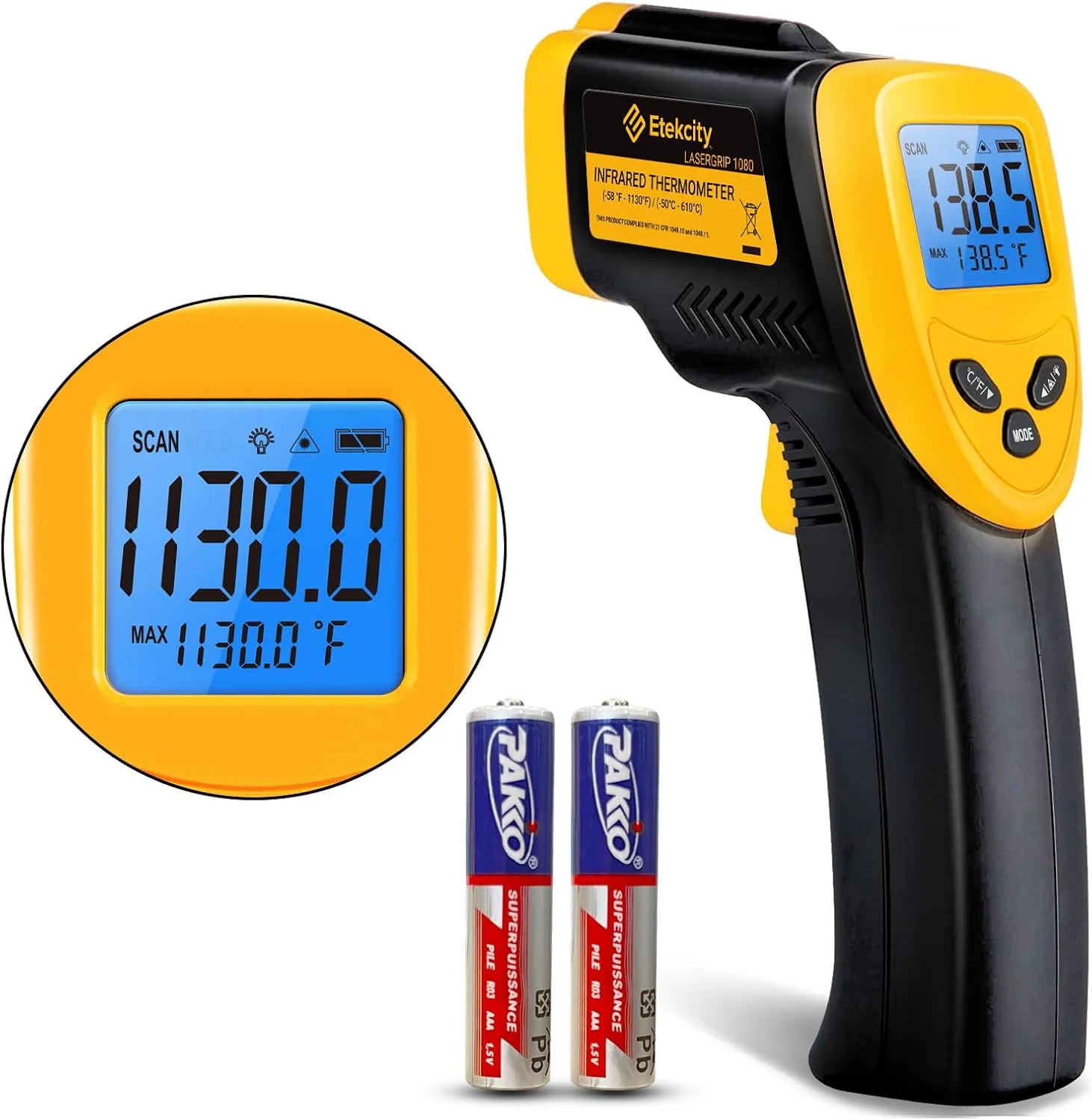
Etekcity Lasergrip Infrared Thermometer
Point-and-read surface temperature, for checking the supply air at a vent.
View on AmazonWhen to Call a Technician
Lennox’s list of reasons to call:
- Cold air persists after you have done the checks above.
- The system cycles on and off repeatedly without reaching the set temperature.
- Ice does not clear after a defrost.
- Grinding, squealing or banging noises, a burning smell, or an error code.
- A sudden jump in the bill.
If the house is comfortable but the bill has climbed, the usual suspect is backup heat running more than it should: see aux heat running too much.
Free: Home Energy Audit Checklist (PDF)
A two-page, room-by-room checklist for finding air leaks, standby power and heating and cooling waste yourself, in the order that pays back fastest. Get it now, plus new fix guides by email. Unsubscribe any time.
By signing up you agree to receive emails from EcoHome Intelligence. See our Privacy Policy.
Frequently Asked Questions
Why does my heat pump blow cold air?
Usually it is not cold, just cooler than furnace air. Carrier says heat pump supply air is typically around 85 to 100°F, compared with roughly 120 to 140°F from a gas furnace. It can also turn briefly cool during a defrost cycle.
How long does a heat pump defrost cycle last?
Lennox says a typical cycle runs 5 to 15 minutes; Carrier says about 5 to 10 minutes.
Is steam coming off my heat pump normal?
Yes, during a defrost cycle. Lennox says it is water vapor from the melting frost.
When is ice on a heat pump a problem?
Carrier says ice thicker than a quarter inch, or ice that remains after a defrost, is not normal and should be inspected.
Should I switch to emergency heat if the air feels cold?
No. Emergency heat shuts the heat pump off and uses only the backup heat, which costs more to run. It is for a heat pump that has failed.
Related Guides
- Heat pump runs constantly in winter — when long run times are normal
- Heat pump frozen or iced up — normal defrost vs a real icing problem
- Emergency heat vs auxiliary heat — what each setting does
- Heat pump not turning on — when the outdoor unit is silent
Sources
- Carrier: Heat pump not heating
- Carrier: Heat pump vs furnace
- Trane: Common reasons for your heat pump not heating
- Trane: What is the heat pump defrost cycle?
- Lennox: Understanding the heat pump defrost cycle
- Lennox: Heat pump blowing cold air
- U.S. Department of Energy: Operating and maintaining your heat pump
