EcoGuide · Heat Pumps · Updated 2026-10-02 · 1,200 words
Heat Pump Runs Constantly in Cold Weather? When That Is Normal
The Short Version
If you grew up with a furnace, heat comes in bursts: it roars, it stops, the house goes quiet. A heat pump does not work that way. Carrier says heat pumps typically run for longer cycles than furnaces and that this is normal; Bryant says a heat pump may run longer in winter than a furnace, often for extended periods.
The reason is the air temperature. Carrier puts heat pump supply air at around 85–100°F against roughly 120–140°F from a gas furnace, so the heat arrives more gradually. Long, steady running is how the system is meant to work.
Why It Gets Longer as It Gets Colder
Two things move against each other as the temperature drops: the house loses heat faster, and the heat pump has less to give. The point where the two meet is the balance point. Natural Resources Canada’s sizing guide defines it as the temperature at which the building’s heating load matches the heat pump’s output: above it the heat pump can meet the need by itself, and below it a backup heating system is required. Close to that point, a heat pump has to run nearly all the time to keep up.
Newer variable-speed and cold-climate models take this further on purpose. NEEP’s consumer guide says cold-climate heat pumps are designed to run almost continuously, at a very low level. For those systems, running all the time is the efficient mode.
When Constant Running Is a Problem
The question is not how long it runs. It is whether the house holds its temperature, and which heat source is doing the work.
| Normal | Worth investigating |
|---|---|
| Runs for hours and the house holds its setpoint | Runs for hours and the house stays more than 2–3°F below the setting |
| Long cycles in cold weather | Runs constantly in mild weather |
| Heat pump doing the work | AUX heat on in mild weather (above about 40°F) |
| Steady running | Starting and stopping every few minutes |
Carrier draws the same line: it can be completely normal for a unit to run all the time in extreme temperatures, but if it is moderately warm outside and the unit is still running constantly, it is time to troubleshoot. On auxiliary heat, Carrier and Trane use the same rough marker: aux heat that runs when it is above 40°F outside points to a problem. Carrier lists the possible causes as a dirty air filter, a refrigerant leak, a malfunctioning sensor, or that the thermostat was raised too quickly.
Short cycling is the opposite pattern and the more harmful one. Trane says repeated short cycling leads to increased wear and tear, and that an oversized system is a common cause. See short cycling causes and fixes.
What to Check
- Is AUX heat showing? If the thermostat shows auxiliary heat for much of the run in mild weather, the expensive backup is doing the heat pump’s job. See auxiliary heat will not turn off.
- Is it on emergency heat? Emergency heat shuts the heat pump off and runs the backup only. If someone selected it in a cold snap and never switched back, it will cost far more to run. See emergency heat vs auxiliary heat.
- The filter. The Department of Energy says to clean or change filters every 3 months or as the maker recommends. A heat pump depends on airflow more than a furnace does.
- The outdoor unit. Keep about two feet clear around it and clear snow, leaves and debris off it.
- The thermostat schedule. Big setbacks work against a heat pump. The Department of Energy’s advice: do not set back the heat pump’s thermostat if it causes the backup heating to come on.
- The house itself. If run time has climbed year over year with the same equipment, the house may be losing more heat than it used to. Start with finding thermal leaks.
Thermostats That Let You Limit Auxiliary Heat
If aux heat is what is running up the bill, the thermostat decides when it is allowed. Both of these have a setting for it.
We may earn a commission if you buy through these links, at no extra cost to you. Products are chosen on published specifications; we do not test them in-house (how we choose).
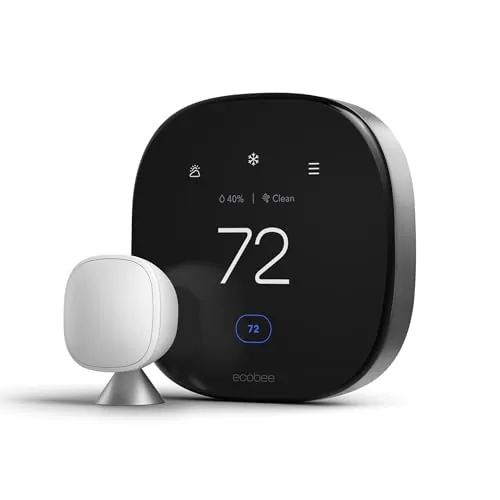
ecobee Smart Thermostat Premium
ecobee thermostats have an Aux Heat Max Outdoor Temperature threshold: the auxiliary heat will not run above it.
View on Amazon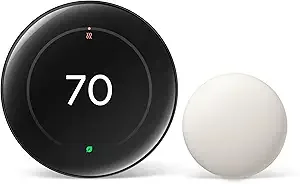
Google Nest Learning Thermostat (4th Gen)
Heat Pump Balance decides how much auxiliary heat to use; it needs Wi-Fi to work.
View on AmazonWhen to Call a Technician
- The house cannot reach or hold the temperature you set.
- Aux heat runs often when it is above about 40°F outside.
- The system starts and stops every few minutes.
- Ice stays on the outdoor unit after a defrost.
- Your bill is far above the same month last year with similar weather.
Free: Home Energy Audit Checklist (PDF)
A two-page, room-by-room checklist for finding air leaks, standby power and heating and cooling waste yourself, in the order that pays back fastest. Get it now, plus new fix guides by email. Unsubscribe any time.
By signing up you agree to receive emails from EcoHome Intelligence. See our Privacy Policy.
Frequently Asked Questions
Is it normal for a heat pump to run constantly in winter?
Often, yes. Carrier and Bryant both say heat pumps run for longer periods than furnaces, and NEEP says cold-climate models are designed to run almost continuously at a low level. It is a concern if the house cannot hold its temperature or the auxiliary heat is on in mild weather.
Why does my heat pump run longer when it is colder?
The colder it is, the more heat the house loses and the less a heat pump can deliver, so it has to run longer to keep up. Below the balance point, backup heat makes up the difference.
When is a constantly running heat pump a problem?
When it runs constantly in mild weather, when the house stays more than a few degrees below the setting, or when the thermostat shows AUX heat above about 40°F outside. Start with the filter, the thermostat mode and the outdoor unit.
Should I turn my heat pump thermostat down at night?
Not by much. The Department of Energy says not to set back a heat pump's thermostat if it causes the backup heating to come on, and ENERGY STAR says heat pumps do not save energy by being turned down when you are away or asleep.
Is short cycling worse than running constantly?
Yes. Trane says repeated short cycling increases wear and tear and can point to an oversized system.
Related Guides
- Heat pump blowing cold air — why the air feels cool
- Emergency heat vs auxiliary heat — what each setting does
- Aux heat running too much — the Nest and ecobee settings
- Best thermostat for a heat pump — models that can lock out aux heat
Sources
- Carrier: Heat pump vs furnace
- Carrier: Heat pump troubleshooting guide
- Carrier: What is auxiliary heat?
- Carrier: Heat pump not heating
- Bryant: Heat pump not heating
- Trane: HVAC short cycling
- NEEP: Getting the most out of your heat pump (PDF)
- Natural Resources Canada: Air-source heat pump sizing and selection guide (PDF)
- U.S. Department of Energy: Operating and maintaining your heat pump
- ENERGY STAR: Air-source heat pumps
- Google Nest Help: Heat Pump Balance
- ecobee Smart Thermostat Enhanced user guide (PDF)
